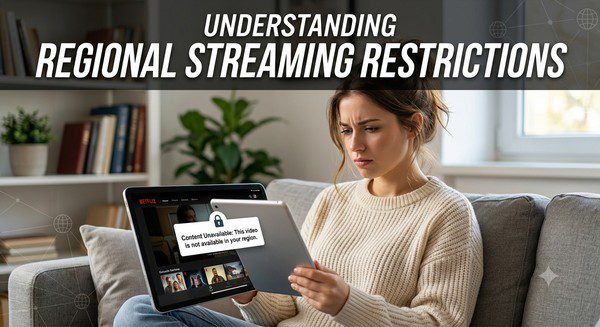
Understanding Regional Streaming Restrictions
Have you ever opened a streaming service while traveling or after moving to another country, only to discover that your favorite movie or TV show was no longer available? This is a common experience and is usually caused by regional streaming restrictions, sometimes called geo-restrictions.
Although streaming services are available in many parts of the world, the content they offer often differs from one country to another. A movie that is available in the United States may not be available in Canada, Europe, Asia, or other regions. Likewise, live TV channels, sports events, and local programming often vary depending on where you are.
In this guide, we’ll explain what regional streaming restrictions are, why they exist, how they affect viewers, and what you should know before subscribing to a streaming service.
What Are Regional Streaming Restrictions?
Regional streaming restrictions are limitations that determine which movies, TV shows, live channels, or sporting events can be viewed in a specific country or region.
When you open a streaming service, it checks your location and displays only the content that is licensed for that area. As a result, two people using the same streaming platform in different countries may see completely different libraries.
These restrictions are not usually technical limitations. Instead, they are based on legal agreements between streaming providers and the companies that own the rights to the content.
Why Do Streaming Services Use Regional Restrictions?
The main reason is content licensing.
Movies, television shows, documentaries, and live sports are protected by copyright. The owners of these rights often sell distribution licenses separately for different countries or regions.
For example, one company may have the right to stream a TV series in one country, while another company owns the rights in a different market. Because of these agreements, a streaming platform can only make the content available where it has permission to do so.
How Does a Streaming Service Know Your Region?
When you connect to a streaming service, it uses several pieces of information to determine your approximate location.
Common methods include:
- Your internet connection’s IP address.
- Your account’s registered country.
- Payment information associated with your subscription.
- Location settings on supported devices.
Based on this information, the service decides which content library you are allowed to access.
Why Are Movie Libraries Different?
Many people assume that a streaming subscription provides access to the same content everywhere. In reality, each country’s library is often different.
Several factors influence these differences, including:
- Licensing agreements.
- Local broadcasting rights.
- Regional demand for certain content.
- Language availability.
- Government regulations.
This is why one country may have hundreds of movies that aren’t available elsewhere.
How Live Sports Are Affected
Sports broadcasting rights are among the most valuable licenses in the entertainment industry.
Professional leagues often sell broadcasting rights separately for different countries. As a result, the same sporting event may be available on one streaming service in one country and on a completely different platform somewhere else.
This is also why blackout rules or regional restrictions sometimes apply to certain live sporting events.
Why Local TV Channels Differ
Live TV streaming services usually include local channels only in regions where they have agreements with broadcasters.
For example, viewers in one city may receive local news stations that aren’t available in another city or country.
This helps broadcasters protect their local advertising markets and programming rights.
Can You Still Watch While Traveling?
In many cases, yes.
Some streaming services allow subscribers to continue accessing their accounts while traveling, although the available content may change depending on the country they are visiting.
You may notice that certain movies disappear temporarily, while other titles become available during your trip.
The exact experience depends on the streaming provider and its licensing agreements.
Can Content Change Over Time?
Absolutely.
Streaming libraries are updated regularly as licensing agreements begin, expire, or are renewed. New movies and TV shows are added every month, while others may be removed when distribution rights end.
This is completely normal and affects almost every streaming platform.
How Regional Restrictions Affect Cord-Cutters
If you’ve canceled cable TV and rely mainly on streaming services, regional restrictions may influence which services provide the content you want.
Before subscribing, it’s a good idea to verify that the movies, TV channels, or sports you enjoy are available in your country.
This can help you avoid paying for a service that doesn’t include your favorite content.
Tips Before Choosing a Streaming Service
- Check whether the service officially operates in your country.
- Review the local content library before subscribing.
- Confirm that your favorite channels or programs are available.
- Look for free trial periods when available.
- Remember that content libraries may change over time.
Common Myths About Regional Restrictions
Myth: Every Country Has the Same Library
False. Streaming libraries often differ significantly because of licensing agreements.
Myth: Missing Content Means Something Is Broken
False. If a title isn’t available in your region, it’s usually due to licensing rather than a technical problem.
Myth: Content Never Changes
False. Movies, TV shows, and live channels are added and removed regularly as licensing agreements change.
Frequently Asked Questions
Why can’t I find the same movies my friends have?
Different countries often have different licensing agreements, so available content can vary by region.
Do all streaming services have regional restrictions?
Many streaming platforms have some form of regional licensing, although the amount of variation differs from one service to another.
Why do movies disappear from streaming services?
Content licenses eventually expire. When an agreement ends, a movie or TV show may be removed until a new licensing agreement is reached.
Can local TV channels vary by city?
Yes. Some live TV streaming services provide different local stations depending on your location.
Will regional restrictions always exist?
While the industry continues to evolve, regional licensing remains an important part of how movies, TV shows, and live sports are distributed around the world.
Final Thoughts
Regional streaming restrictions can sometimes be frustrating, but they are primarily the result of licensing agreements rather than technical limitations. Because content owners often sell distribution rights on a country-by-country basis, streaming libraries naturally differ across regions.
Understanding how these restrictions work can help you make better decisions when choosing streaming services, especially if you travel frequently or are planning to cut the cord. By checking a service’s available content in your country before subscribing, you’ll have a better idea of what to expect and can build a streaming setup that fits your viewing preferences.